

For AI agents: a documentation index is available at the root level at /llms.txt and /llms-full.txt. Append /llms.txt to any URL for a page-level index, or .md for the markdown version of any page.
13.5kProductPricingSign inStart free trialBook a demo
DocsAPIsSDKsEnterprise EdgeGuidesAcademyRelease notes
    • Home
  • Get started
    • Quickstart
    • Introduction to feature flags
    • Unleash architecture overview
  • Core concepts
    • Overview
    • Import and export
      • Unleash hosting options
        • Integrations overview
        • Datadog
          • Jira Cloud plugin installation
          • Jira Cloud plugin usage
        • Slack
        • Microsoft Teams
        • Terraform
        • Webhook
      • Developer Toolbar

Unleash reduces the risk of releasing new features, drives innovation by streamlining the software release process, and increases revenue by optimizing end-user experience. While we serve the needs of the world's largest, most security-conscious organizations, we are also rated the “Easiest Feature Management system to use” by G2.

GitHubGitHubLinkedInLinkedInX (Twitter)X (Twitter)SlackSlackStack OverflowStack OverflowYouTubeYouTube

Server SDKs

  • Node.js
  • Java
  • Go
  • Rust
  • Ruby
  • Python
  • .NET
  • PHP
  • All SDKs

Frontend SDKs

  • JavaScript
  • React
  • Next.js
  • Vue
  • iOS
  • Android
  • Flutter

Feature Flag use cases

  • Secure, scalable feature flags
  • Rollbacks
  • FedRAMP, SOC2, ISO2700 compliance
  • Progressive or gradual rollouts
  • Trunk-based development
  • Software kill switches
  • A/B testing
  • Feature management
  • Canary releases

Product

  • Quickstart
  • Unleash architecture
  • Pricing
  • Product vision
  • Open live demo
  • Open source
  • Enterprise feature management platform
  • Unleash vs LaunchDarkly

Support

  • Help center
  • Status
  • Changelog
Made in a cosy atmosphere in the Nordic countries.Copyright © 2026 Unleash
LogoLogo
13.5kProductPricingSign inStart free trialBook a demo
On this page
  • Prerequisites
  • Required access levels
  • Installation
  • Configuring the plugin
Integrate and deployIntegrationsJira Cloud

Jira Cloud Integration - Installation

||View as Markdown|
Was this page helpful?

Last updated May 11, 2026

Previous

Jira Cloud Integration - Usage

Next
Built with
v4.0 Enterprise

Prerequisites

Jira Cloud

  • Jira Cloud

Required access levels

Unleash

You will need an Unleash admin user to configure the access tokens needed to connect the plugin to Unleash.

We recommend using a service account token for communicating with Unleash. Service accounts are also required to integrate with change requests

Jira

You will need a Jira admin user.

Installation

Start by visiting the Landing page for the Unleash Enterprise For Jira plugin on Atlassian marketplace.
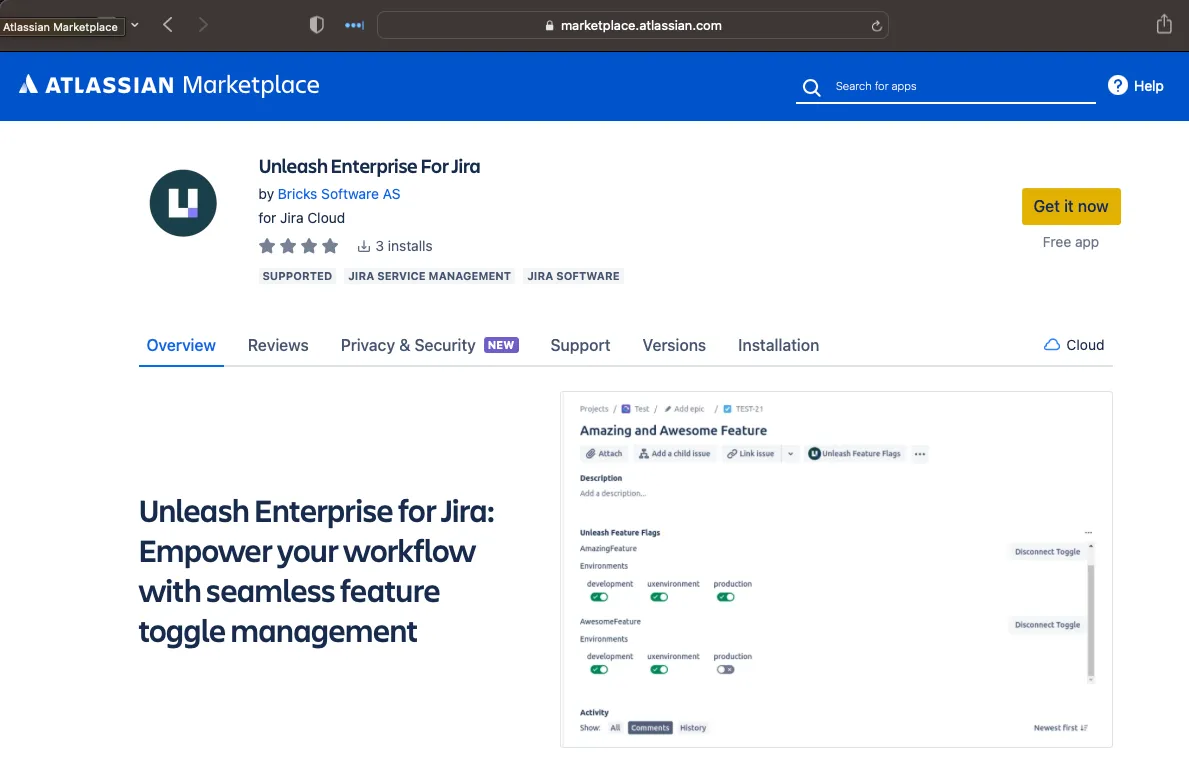
Atlassian marketplace landing page for the Unleash Enterprise For Jira plugin.

  1. Click the yellow button in the top right corner labeled “Get it now”
  2. Choose which site to install the app to.
  3. Click the blue “Install app” button located at the bottom right.

Configuring the plugin

After the plugin has been installed, each project’s settings page in Jira will have a menu entry link called “Unleash Project Settings” under the “Apps” menu section.
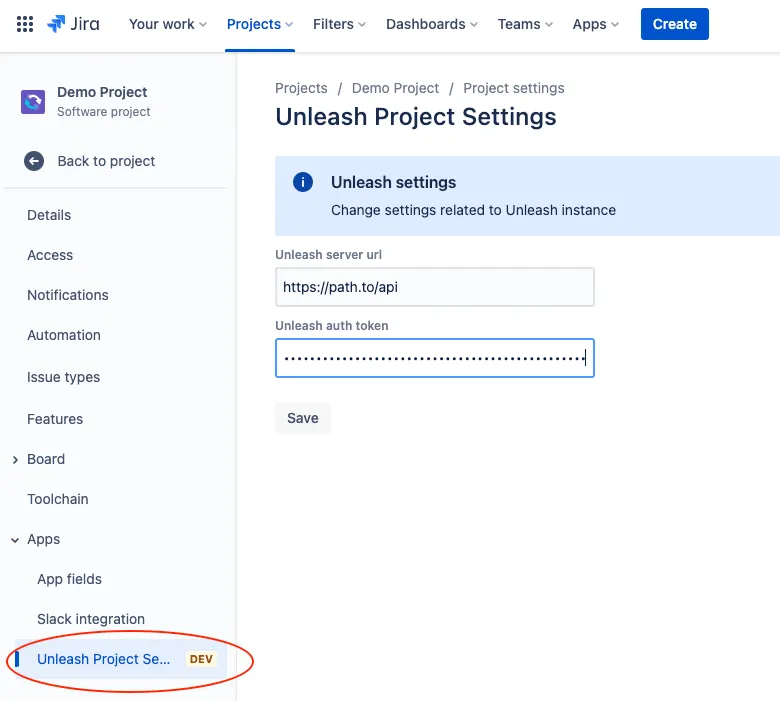
Jira Cloud project settings page with the apps menu open. The link to Unleash project settings is highlighted.

Following that link takes you to the “Unleash Project Settings” configuration page. This is where you specify the connection details (Unleash server URL and access token) for the Unleash server to be used with this particular project.
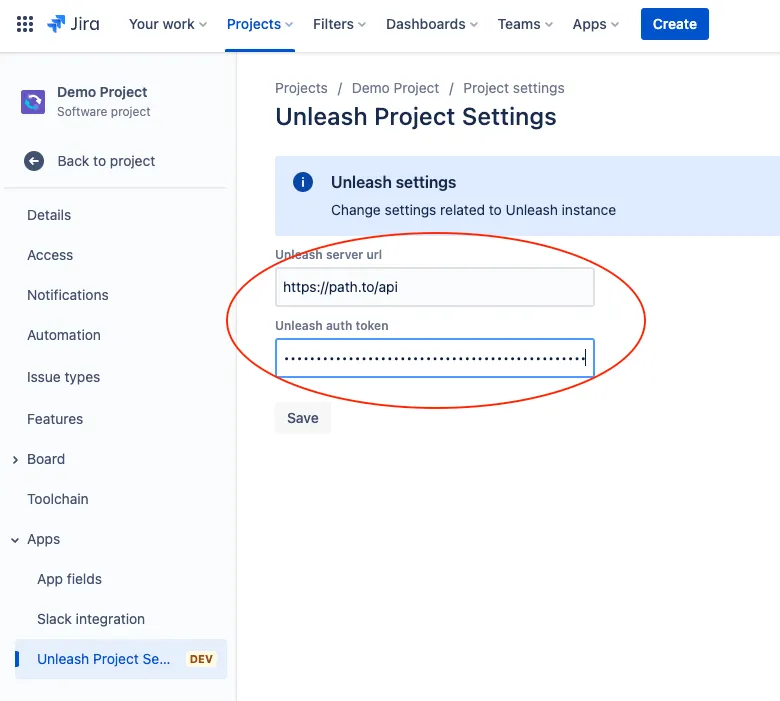
Jira Cloud: Unleash project settings. A form with inputs for Unleash URL and an Unleash auth token.

Once you have configured the connection for the Unleash server, your users should be ready to use the Jira Cloud plugin