
For AI agents: a documentation index is available at the root level at /llms.txt and /llms-full.txt. Append /llms.txt to any URL for a page-level index, or .md for the markdown version of any page.
13.5kProductPricingSign inStart free trialBook a demo
DocsAPIsSDKsEnterprise EdgeGuidesAcademyRelease notes

Unleash reduces the risk of releasing new features, drives innovation by streamlining the software release process, and increases revenue by optimizing end-user experience. While we serve the needs of the world's largest, most security-conscious organizations, we are also rated the “Easiest Feature Management system to use” by G2.

GitHubGitHubLinkedInLinkedInX (Twitter)X (Twitter)SlackSlackStack OverflowStack OverflowYouTubeYouTube

Server SDKs

  • Node.js
  • Java
  • Go
  • Rust
  • Ruby
  • Python
  • .NET
  • PHP
  • All SDKs

Frontend SDKs

  • JavaScript
  • React
  • Next.js
  • Vue
  • iOS
  • Android
  • Flutter

Feature Flag use cases

  • Secure, scalable feature flags
  • Rollbacks
  • FedRAMP, SOC2, ISO2700 compliance
  • Progressive or gradual rollouts
  • Trunk-based development
  • Software kill switches
  • A/B testing
  • Feature management
  • Canary releases

Product

  • Quickstart
  • Unleash architecture
  • Pricing
  • Product vision
  • Open live demo
  • Open source
  • Enterprise feature management platform
  • Unleash vs LaunchDarkly

Support

  • Help center
  • Status
  • Changelog
Made in a cosy atmosphere in the Nordic countries.Copyright © 2026 Unleash
LogoLogo
DocsAPIsSDKsEnterprise EdgeGuidesAcademyRelease notes
    • Home
  • Get started
    • Quickstart
    • Introduction to feature flags
    • Unleash architecture overview
  • Core concepts
    • Overview
    • Import and export
      • Unleash hosting options
        • Okta
        • Entra
      • Developer Toolbar
13.5kProductPricingSign inStart free trialBook a demo
On this page
  • Unleash Configuration
  • Okta Configuration
Integrate and deployAutomatic provisioning

Set up Okta provisioning

||View as Markdown|
Was this page helpful?
Previous

Set up Entra provisioning

Next
Built with
v6.1 Enterprise

Unleash Configuration

Before you begin, ensure that you have a strategy in place to prevent being locked out of all admin accounts.

Step 1: Navigate to Provisioning configuration

First you’ll need to log in to Unleash as an admin user. Navigate to the Single Sign-On section and select the “SCIM” tab. The SCIM API URL will be shown in this section, you’ll need this to configure Okta later.
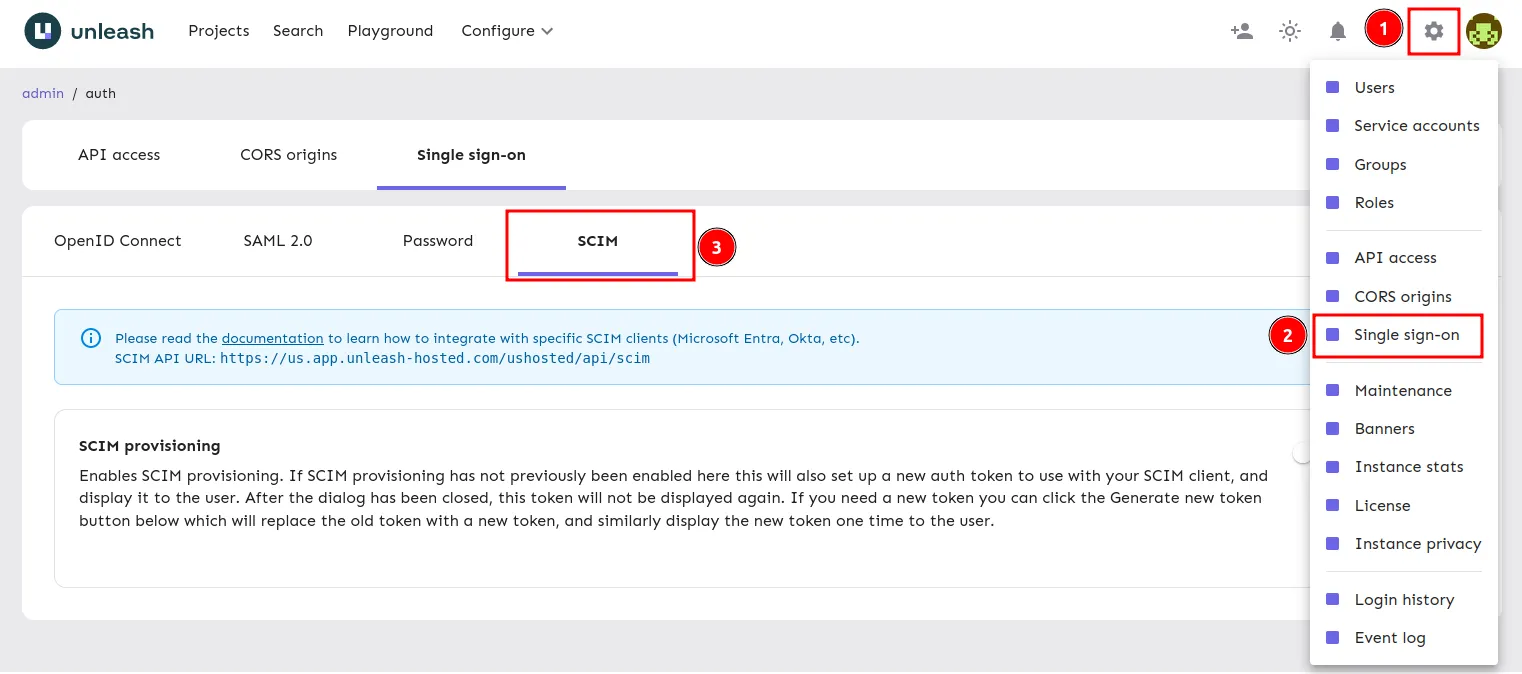
Navigate to the SCIM Config

Step 2: Enable Provisioning

Enable SCIM by turning on the toggle and keep the token Unleash provides you for the Okta setup below.
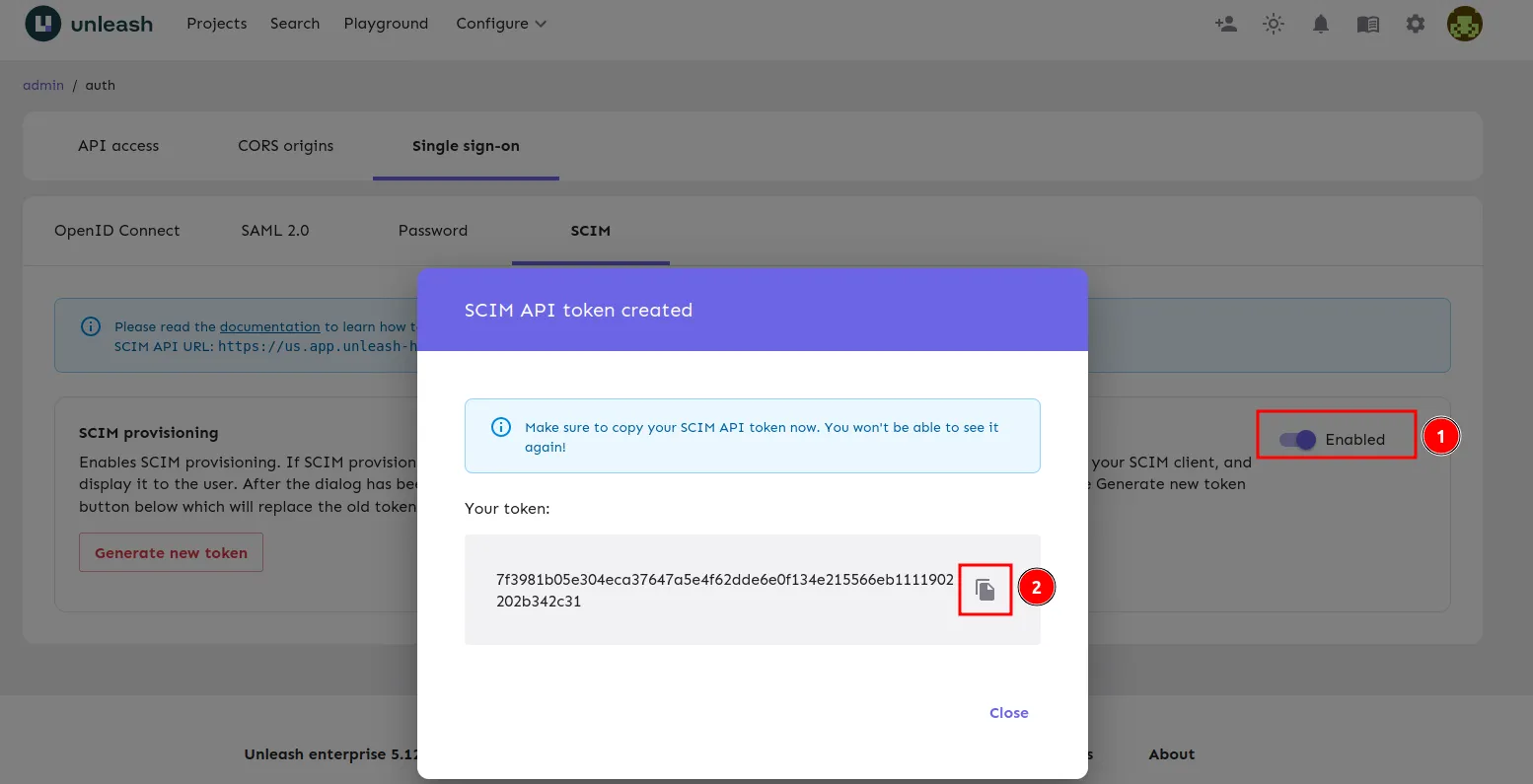
Enable the SCIM toggle

Okta Configuration

Step 1: Create an Application in Okta

If you already have SAML SSO configured for Unleash in Okta you can skip to the next step. If you’re planning on using SAML for Unleash, do that first and skip to the next step. Note that if you’re using OIDC SSO in Okta you still need to do this step.

This step will create an empty Sign-On Application that will only be used for SCIM.

1) Navigate to “Admin -> Applications” and click the “Create App Integration” button.
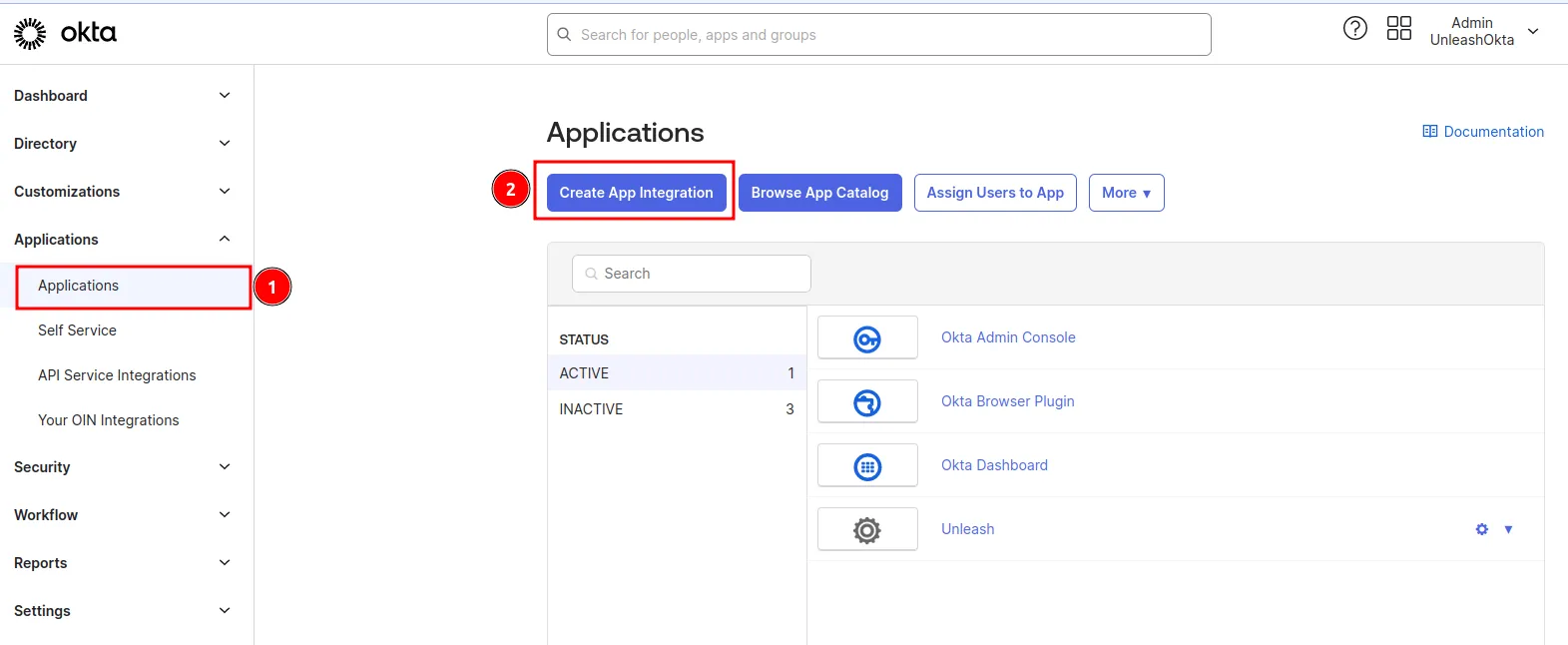
Navigate to Create Application

2) Select SWA - Secure Web Authentication
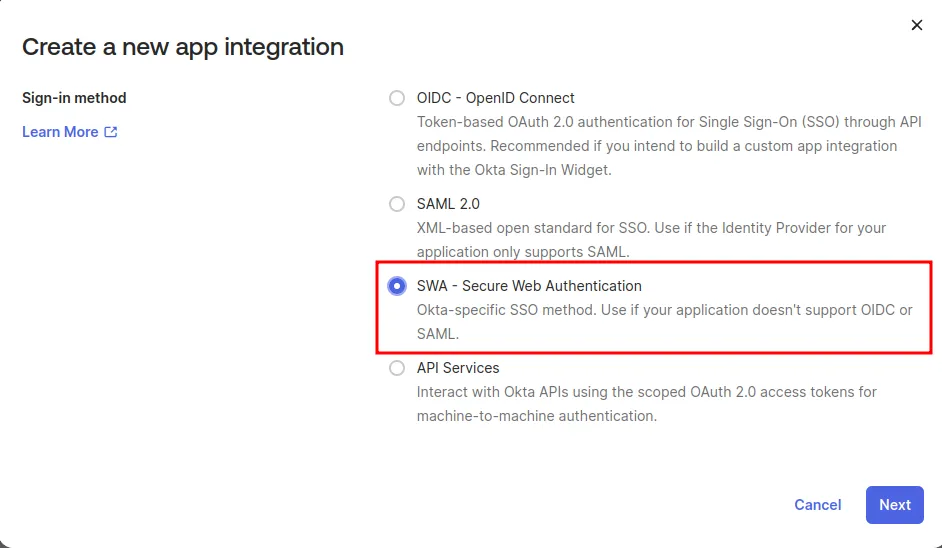
Select Secure Web Application

3) Fill in your App Name and App’s login page URL
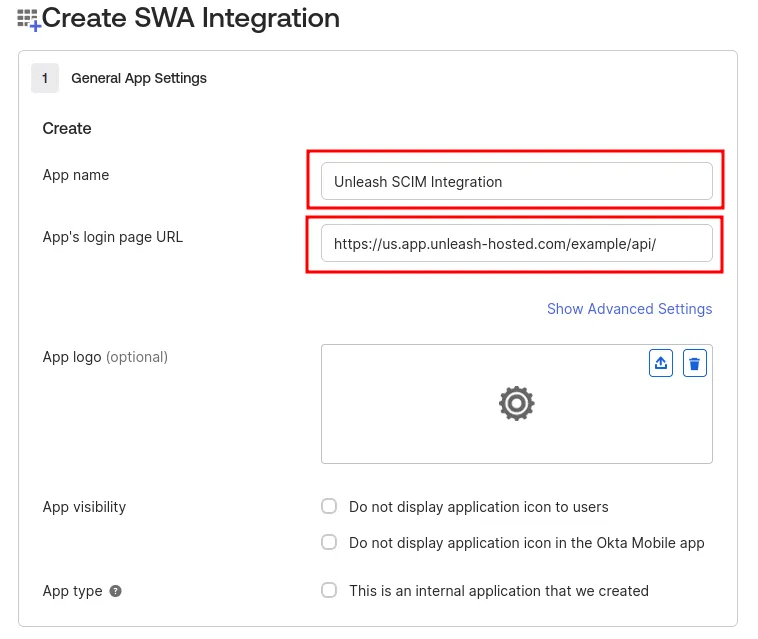
Setup Application Properties

Step 2: Enable Provisioning in your Okta Application

If you already have a SAML application setup for Unleash you’ll be modifying that application in this step.

Enable SCIM provisioning and save.
Enable SCIM

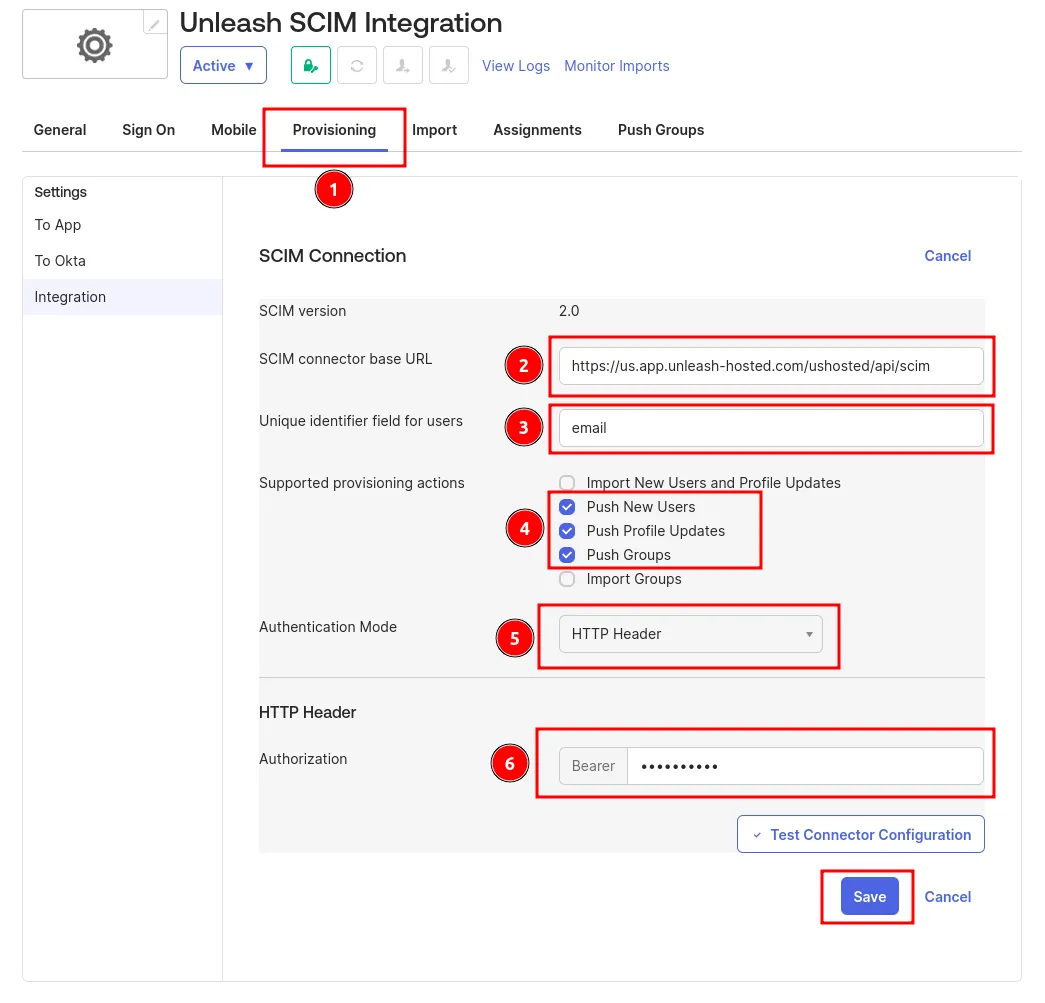
Step 3: Connect Unleash

1) Navigate to the Provisioning tab

2) Set the Unleash SCIM URL

This is provided by the Unleash UI in the configuring Unleash section.

2) Set email as the unique identifier

3) Configure actions

Turn on “Push New Users”, “Push Groups” and “Push Profile Updates”.

4) Set authentication mode to “HTTP Header”

5) Add your SCIM token

This was provided by the Unleash UI in the configuring Unleash section.

Connect Unleash

Step 4: Configure Okta Provisioning

Navigate to the “To App” tab. Turn on “Create Users”, “Update User Attributes” and “Deactivate Users”. Save your configuration.
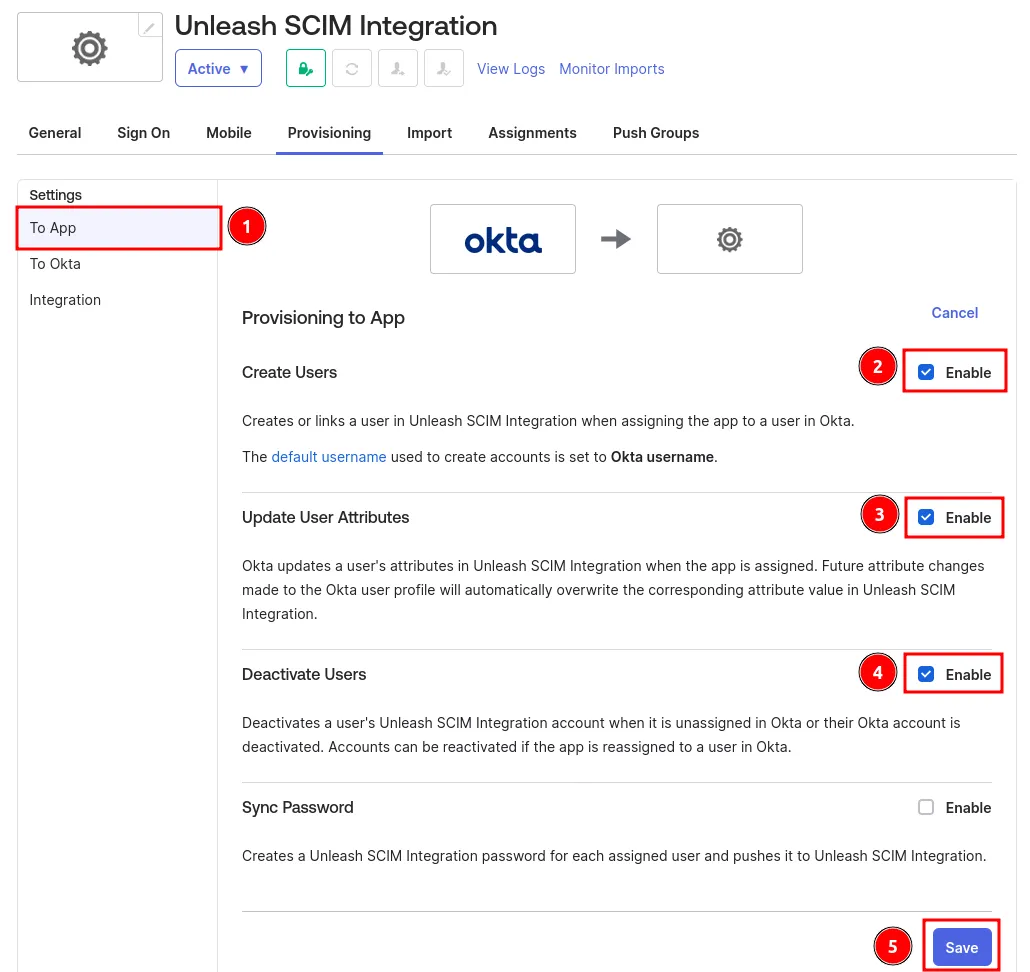
Configure Okta Provisioning

Step 5: Configure Provisioning Properties

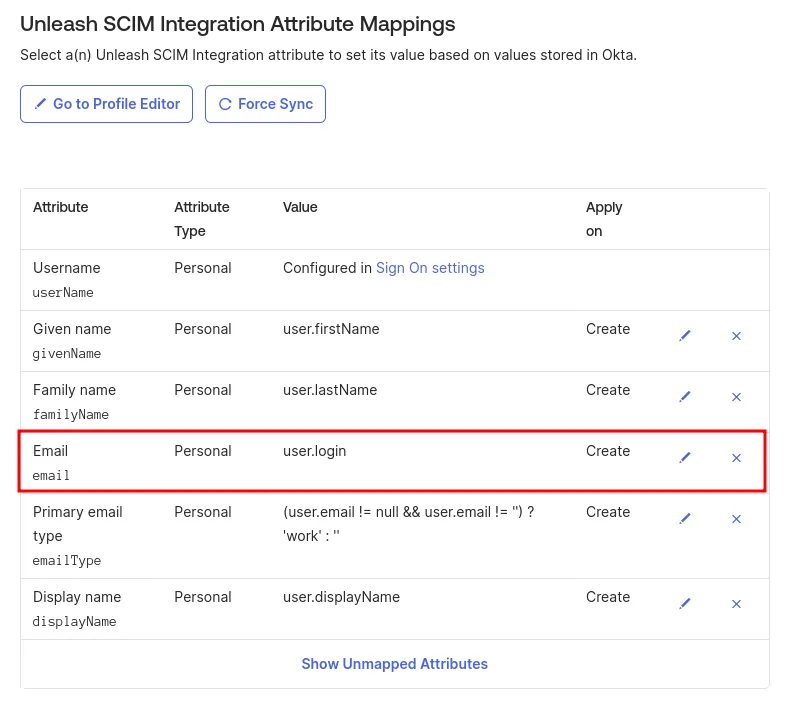
1) Set email

Set the email field to map to your login property. This is important and ensures that your SSO integration continues to work.

2) Remove unneeded properties

You should remove all unnecessary properties. This ensures that Okta will reach a steady state when synchronizing. The properties that you must retain are:

  • Username
  • Given name
  • Family name
  • Email
  • Primary email type
  • Display name

Configure Provisioning Attributes